

Support for affiliated clubs, schools and partner gyms:
At British Weight Lifting, we’re committed to helping local clubs grow, thrive, and make a lasting impact in their communities. Whether you're looking for guidance on funding opportunities, welfare and safeguarding practices, legal compliance, or day-to-day operations, our Club Support Hub is here to provide you with the tools, resources, and expert advice you need.
We understand that strong clubs are the foundation of our sport – that’s why we’re here to support you at every stage of your journey. Explore the sections below to find tailored support and practical solutions designed to help your club succeed.
Still have questions? Get in touch with our Club Development Officer Hannah: hannah.bussey@britishweightlifting.org
Running a Tier 3 competition is one of the most rewarding ways to develop your club, support local athletes and grow participation in weightlifting.
Whether you're planning your first event or looking to improve on previous competitions, good preparation is the key to creating a positive experience for everyone involved. From first-time competitors to experienced coaches and technical officials, a well-run competition can leave a lasting impression.
Here's our guide to hosting a successful Tier 3 competition.
How to Apply for Funding for Your Club
By Hannah Bussey, Sport Development Manager
It can seem like a daunting process if you’ve not applied for funding before, but it’s a skill that can be quickly learned regardless of your previous experience is.
We can help you develop your funding application and provide support along the way.
Whenever I become aware of new funds becoming available, I post about these on Instagram @hannah_bwl.
Examples of Funded Projects
Project Case Study – The Soma Space (more information)
Eligibility for Funding
Positioning your club to receive public funding will enable to you obtain the investment needed to increase your impact and reach your long-term goals.
To receive funding, you’ll need to be applying as an eligible not for profit organisation. ‘Not for profit’ is a general term and doesn’t mean that your organisation can’t make an income or pay coaches.
Example ‘not for profits’:
- Sports clubs
- Charities
- Schools
- Community Benefit Societies
- not-for-profit companies e.g. Community Interest Companies
To receive funding, you need to have at least three non-related leaders who don't live together. And you need to ensure decision making and voting rights are equally distributed.
To receive more than £10,000 of funding from us, you need to meet Tier 1 of the UK governance code.
If you’re applying as a Sports Club, it’s important to:
- Implement a constitution
- Recruit a committee that has regularly scheduled meetings with minutes recorded.
- Use an independent bank account – Funders generally say that should you be successful in securing grant funding, you'll be required to provide evidence of a bank account set up in the name of your organisation (e.g. copy of bank statements).
Tip: If you get a business account, you’ll be charged for the account but if you get a ‘Community’ or ‘Treasurer’s’ account the charges will be more favourable. The bank may need evidence that your club exists, for example a copy of your Constitution and Committee Minutes.
Main National Funds
Your funding application needs to meet the funders objectives and also be realistic for your organisation to achieve.
- Funds have different objectives and targets audiences, so pick one that most aligns with your ethos and ambition.
- You may need to develop a ‘project’ to meet the funder’s objectives.
- Funding can usually be used for equipment, coach delivery fees, qualifications for volunteers, and sometimes venue hire, running costs, or other costs.
- Active Partnerships – each area in England has an Active Partnership that’s focussed on connecting local partners to create conditions for an active nation. They sometimes distribute funding themselves, but also know what other funds may be available to schools and clubs locally.
- The Weightlifting Foundation – a fund specific to affiliated weightlifting clubs.
- Sport England Movement Fund (grants up to £15,000) – a good fund if your project provides opportunities for new participants facing barriers to activity, such as:
- People living on low incomes
- Disabled people or those with long-term health conditions
- Older people
- People from culturally diverse communities
- Pregnant women and parents with very young children
- Girls aged 5-16
- LGBTQ+ people
- People who are in foster care
- People who provide care without pay.
- Sport Scotland Sports Facilities Fund– this fund supports capital projects that help to create or improve places where people take part in sport and physical activity.
- Sport Wales Be Active Wales Fund - grants from £300 to £50,000 for projects in Wales that enable more people to participate in physical activity.
- National Lottery Award for All (grants up to £20,000) – a good fund if your project is focussed on at least one of these outcomes:
- Bringing people together to build strong relationships in and across communities
- Improving the places and spaces that matter to communities
- Helping more people to reach their potential, by supporting them at the earliest possible stage
- Supporting people, communities and organisations facing more demands and challenges because of the cost-of-living crisis
- Blue Spark Foundation – a funder which supports the education and development of children and young people by providing grants for educational, cultural, sporting and other projects.
- Green King Proud to Pitch In Fund (grants up to £4,000) - a fund specific to sports clubs for the tools they need to continue to play the sport they love.
- Many other smaller funds are intermittently available and publicised by British Weight Lifting and Active Partnerships.
Creating Your Application
Funding applications are usually written up but sometimes take the form of video submissions.
Generally speaking, funders ask similar questions. So, these are good places to start at the outset of designing your project even if you don’t know all of the answers yet.
- What does the project look like?
- What’s the purpose of the project?
- Who is your target audience? (many funders want you to be quite specific about this)
- How do you know they’re interested in your activity?
- Is this for a new audience or people who are already taking part in physical activity provided by your organisation?
- What are the desired outcomes of the project?
- How will you know if the project has been successful?
- How many people will the project benefit / cater for?
- How much funding are you applying for and how will it be spent?
- Where will activity take place?
- Who will deliver it?
- What’s the timescale and dates?
- How will the participants be able to continue participating once the project ends?
Evidencing Demand
Funders like it when you can evidence pre-existing interest and demand for your activity from your target audience. They want to know your project is ready to be delivered and you’re not guessing about who might take part in it.
So, before you submit your application it’s a good idea to:
- Hold come and try events, deliver taster sessions, host an open day, attend community gatherings such as active park events
- Speak to your target audience, gain feedback and collect expressions of interest from them (e.g. names, contacts details, comments)
- Build connections and involve other organisations in your area who have access to your target audience (e.g. schools, charities, community groups) and work with them in a similar way.
This will be important evidence to include in your funding application.
What Happens if You’re Unsuccessful?
The reality is you’re unlikely to be successful with all funding applications that you submit, so don’t be deterred! It’s especially tricky the first time, but thankfully it’s a skill that’s quickly learned.
Funds can be significantly oversubscribed and a success rate of one in five is considered a good average.
Some funders will give you detailed feedback to help you resubmit. Understanding the reasons behind the decision will also help you with any future funding applications.
Contact British Weight Lifting
Let us know if you’re thinking of applying for funding or need some guidance. If you’re successful, we can help publicise your good news to help other clubs.
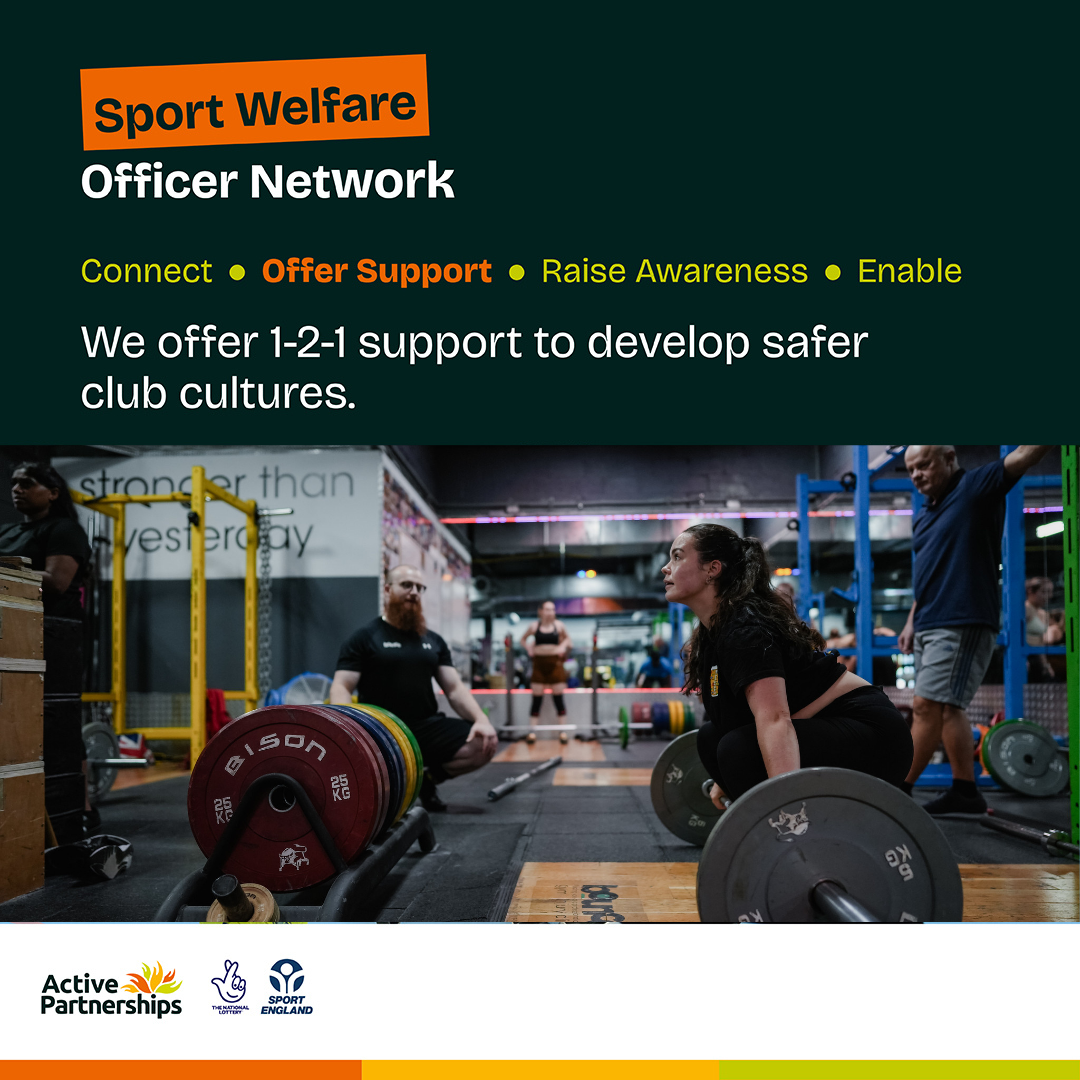
The Sport England-funded initiative ensures new clubs can establish strong safeguarding and welfare practices from the start. This network supports National Governing Bodies (NGBs) and their local clubs to promote good practice and safer sport for all.
The SWO Network consists of 63 dedicated Sport Welfare Officers (SWOs) across 43 Active Partnerships, working closely with Sport England and key partners to develop local approaches to assisting and supporting Club Welfare Officers.
To lead and maintain strong connections, the initiative has a Strategic Lead for Welfare and a Programme Manager dedicated to overseeing the network’s impact and operations.
How Can the SWO Network Help?
- One-to-one support for Club Welfare Officers.
- Club visits to develop safer and more inclusive cultures.
- Networking opportunities with other welfare officers.
- Training, learning, and signposting to key resources.
- Raising awareness through campaigns and local events.
Contact your local Sport Welfare Officer today: Find Your Officer.
British Weight Lifting (BWL) is pleased to offer all BWL affiliated Clubs and Partner Gyms access to trusted legal advice, through our partnership with Ward Hadaway – Legal Experts in the Sports Sector.
Offer for Affiliated Clubs and Partner Gyms
As trusted legal advisers within the sports sector, Ward Hadaway will support BWL and its Affiliated Clubs and Partner Gyms through services that are strategic, pragmatic, value for money and conscious of our shared values.
Phil Edmonson is Partner at Ward Hadaway and Independent Board Member & Legal Counsel with British Weight Lifting, and said:
“Your organisation’s first conversation with Ward Hadaway is free, confidential and without obligation. At the conclusion of your first call, you will then have the choice whether and how to proceed.
We appreciate the budgetary challenges NGBs and clubs and participants face and that an initial conversation is critical to deciding whether to incur the costs of legal advice. We believe that each initial call will likely be all that is required to improve an affiliated club, member or gym’s understanding of next steps.
As standard practice, we would always provide full details of fixed or estimated costs and charging rates. Our desire to support BWL and its Affiliated Clubs is reflected in the fact that we are prepared to offer preferential rates approximately 55% of our Standard Hourly Rates”
How can Ward Hadaway Help?
Ward Hadaway can support with legal issues you’re seeking advice about such as governance, employment, corporate, property, data protection or commercial law issues and are willing to assist members in their personal or business capacities.
As an example, Ward Hadaway can help your club convert to a Community Interest Company but is likely to be able to assist with almost any legal query
Evidencing eligibility to access this offer
An organisation or member must be able to evidence that it is affiliated with British Weight Lifting. For example, by supplying a copy of the Affiliated Club or Partner Gym certification in a form which we can verify with British Weight Lifting.
How to contact Ward Hadaway
The lead lawyers at Ward Hadaway supporting this initiative are Zach Ward, Phil Edmondson (a BWL Independent Non Executive Board member) and Matthew Brady.
For Community Interest Company conversions or other reorganisations, please email:
adrian.ballam@wardhadaway.com and phil.edmondson@wardhadaway.com
For all other legal enquiries, please email or phone:
Zach.ward@wardhaway.com (0330 137 3309 or 0784 525 6475)
Ward Hadaway will always provide you with full details of the fixed or estimated costs involved should you want to proceed with their legal support.
Please rest assured that your conversations with and all advice received from Ward Hadaway will remain confidential between you and Ward Hadaway unless you give permission for them to be shared with British Weight Lifting. If for any reason Ward Hadaway is concerned that assisting you would not be in your best interests or would conflict with its or Phil Edmondson's existing relationship with British Weight Lifting in any material way, then Ward Hadaway will always signpost you to other appropriate sources of legal advice. We will not pass on any details of your enquiry to any third parties without your permission, so you can speak freely with us in your initial call.
Further resources:
You can see out dedicated safeguarding pages here:
Safeguarding should be a top priority in your club. Clubs have a responsibility for the safety and welfare of lifters, coaches, volunteers, officials and visitors. This responsibility applies to all clubs, regardless of their size or structure. The following guidance will help protect all involved, from your club to those who participate in it.
You can see out dedicated safeguarding pages here:
Child Protection and safeguarding
Partners
-
 Official Partner
-
 Official Equipment Partner
-
 Official Photography Agency
-
 Official Partner
-
 Official Partner
-
 Official Partner
-
 Official Travel Partner
-
 Partner
-
 Funding Partner
-
 Funding Partner
-
 Funding Partner
-
 Official Strategic Partner
-
 Official Strategic Partner
-
 Official Strategic Partner
-
 Weight Lifting Foundation Charity
-
 Official ELearning Partner
-
 Official Awarding Organisation
-
 Official Course Endorsement



c/o Affinia 3rd Floor Chancery House St Nicholas Way Sutton Surrey SM1 1JB
Website designed and developed by 93FT in partnership with Sport80.
